Wiring the Wins: Inside Notification Networks That Accelerate Rewards Across Football Pitches, Racing Ovals, and Dealer Floors
David Becker · Sep 17, 2026

Wiring the Wins: Inside Notification Networks That Accelerate Rewards Across Football Pitches, Racing Ovals, and Dealer Floors
Notification networks in modern betting platforms operate through layered systems that deliver instant updates on odds shifts, live event triggers, and reward activations, and these networks connect user devices directly to backend servers that process events from football matches, horse racing circuits, and casino dealer tables. Data from mobile applications shows that push notifications and in-app alerts reduce the time between an opportunity appearing and user engagement, which in turn accelerates reward distribution through automated payout queues.
Core Components of Notification Infrastructure
Engineers build these systems around event-driven architectures where sensors on betting exchanges feed live data streams into central processors, and the processors then trigger alerts based on predefined user preferences for specific leagues, tracks, or table games. Research from the European Gaming and Betting Association indicates that integrated notification layers handle millions of concurrent signals during peak hours, which allows platforms to maintain consistent delivery across football pitches where goal scorers update odds instantly, racing ovals where finish-line results prompt bonus triggers, and dealer floors where card draws activate loyalty points.
Those who maintain the networks rely on protocols that prioritize low-latency transmission, while segmentation ensures that alerts for live football wagers do not interfere with racing result notifications or casino spin rewards. Studies conducted by the University of Nevada, Reno Gaming Research Center reveal that optimized notification routing cuts average response times by measurable margins, and operators apply these efficiencies to scale reward processing without manual intervention.
Application Across Football, Racing, and Casino Environments
Football betting environments use notification clusters to flag in-play developments such as corner kicks or substitutions, and the same clusters route reward confirmations when users hit accumulator targets. Observers note that platforms synchronize these alerts with payment gateways so that verified wins move into withdrawal pipelines within seconds of confirmation. Racing platforms similarly deploy oval-specific triggers that notify users of changing tote odds or dead-heat resolutions, after which reward networks push loyalty multipliers directly to account balances.
Dealer floor operations in casino sections integrate notification streams that highlight table limits, progressive jackpot thresholds, and dealer changes, and the streams link to accelerated cashout sequences once players meet playthrough requirements. Figures from industry reports compiled by the Canadian Gaming Association demonstrate that cross-vertical notification frameworks support simultaneous activity in all three domains without latency spikes that previously delayed reward releases.
Integration With Reward Acceleration Mechanisms
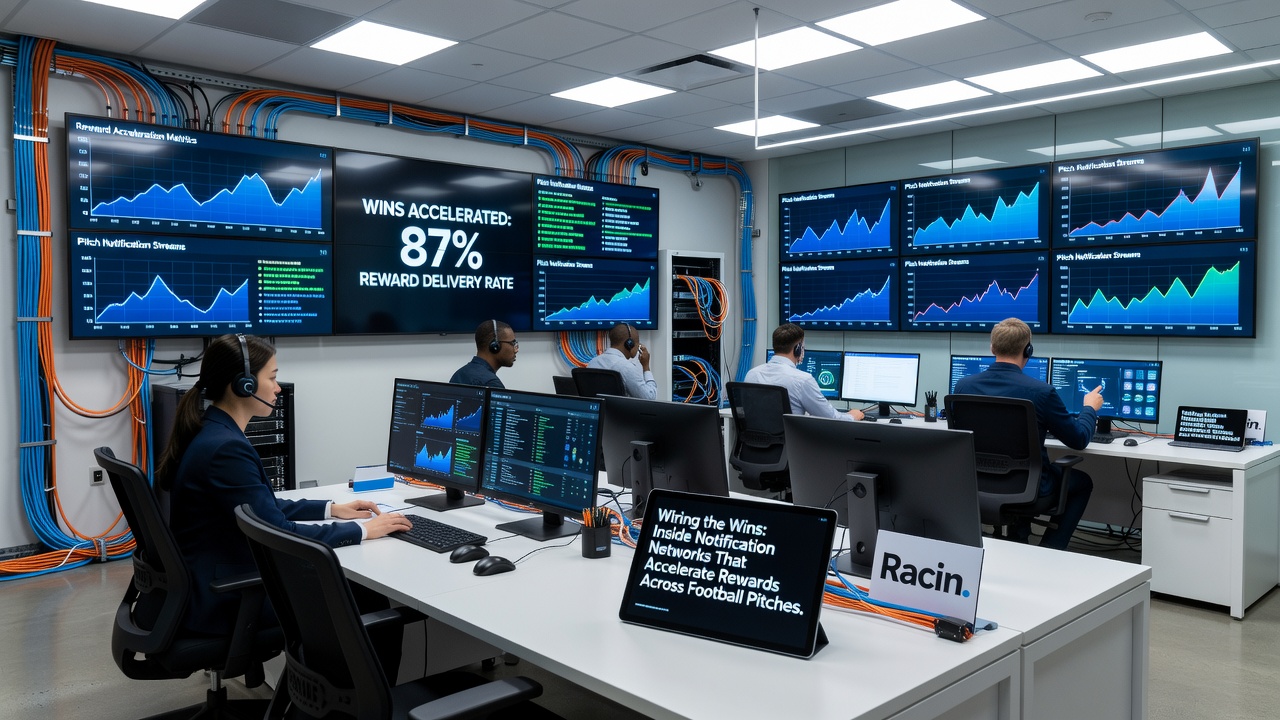
Reward acceleration occurs when notification networks feed directly into automated verification modules that check wager status against payout rules, and these modules then authorize transfers to user accounts or external banking rails. Operators configure rule sets that activate bonuses upon notification receipt, which shortens the interval between event completion and fund availability. Data compiled through 2025 shows continued refinement of these pathways, with further adjustments scheduled for September 2026 as platforms prepare for updated technical standards on real-time reporting.
One documented case involves a multi-sport operator that linked its notification server cluster to a unified reward ledger, and the linkage allowed football live-bet wins, racing place payouts, and casino hand bonuses to process through a single queue. Researchers tracking similar implementations report that such consolidation reduces duplicate verification steps and supports higher transaction volumes during major events.
Security and Compliance Layers
Notification networks incorporate encryption standards and authentication checks that verify user identity before reward alerts reach devices, and these measures align with regional regulatory frameworks outside the UK. Compliance teams monitor alert logs to ensure that reward notifications match verified outcomes, which prevents premature or erroneous distributions. Reports from the Australian Institute of Criminology highlight how audit trails generated by notification systems provide regulators with timestamped records that support oversight of reward timing and accuracy.
Platforms also embed preference management tools within the notification layer so users control which event types generate alerts, and this control extends to reward categories across football, racing, and casino verticals. The resulting data flows help operators refine delivery without compromising the speed that users expect from integrated reward systems.
Conclusion
Notification networks continue to serve as the connective tissue that links live events on football pitches, racing ovals, and dealer floors to accelerated reward pathways, and ongoing technical developments maintain the pace of these connections. Operators that refine event detection, routing logic, and payout integration sustain the operational efficiency required for high-volume environments, while regulatory reporting requirements shape the evolution of secure alert delivery. The infrastructure remains focused on measurable reductions in processing intervals across all covered betting categories.